
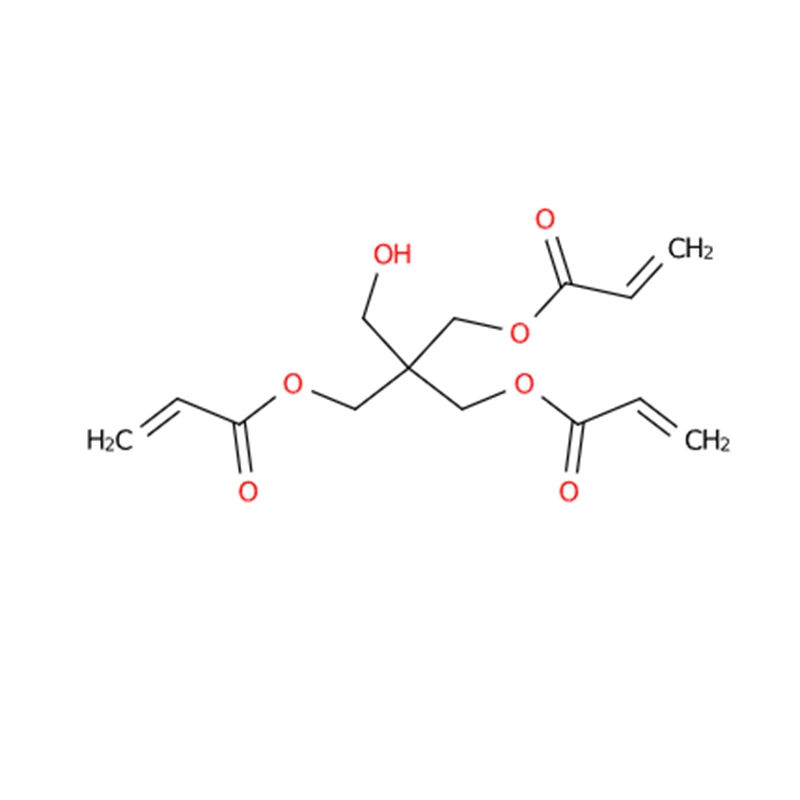
Product Description of Pentaerythritol Triacrylate CAS#3524-68-3
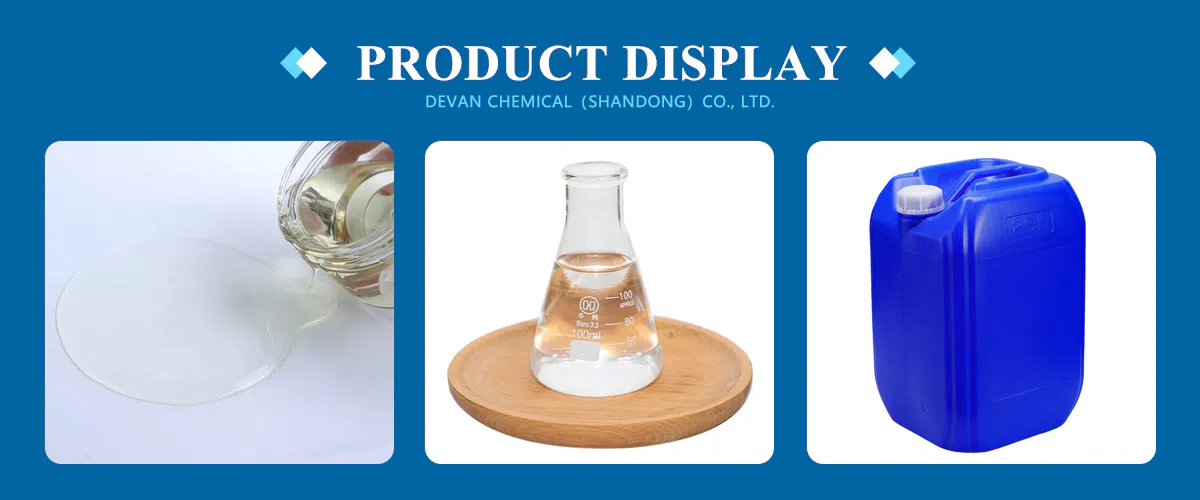
Pentaerythritol triacrylate, commonly shortened to PETIA or PETA, counts as a multi-functional cross-linkable monomer with active reactivity. The chemical takes the form of sticky liquid, whose colour varies between transparent and pale-yellow.
This monomer acts as one essential constituent for ultraviolet-light cured material systems. Its applicable scope covers raw materials for surface coatings, bonding adhesives, printing ink compositions as well as photoresist preparations.
Pentaerythritol triacrylate Chemical Properties
| Melting point | 15℃ |
| Boiling point | 359.71°C (rough estimate) |
| density | 1.18 g/mL at 25 °C (lit.) |
| refractive index | n20/D 1.483(lit.) |
| Fp | >230 °F |
| storage temp. | Inert atmosphere,Room Temperature |
| solubility | Chloroform (Slightly), Methanol (Slightly) |
| pka | 13.63±0.10(Predicted) |
| form | Viscous liquid |
| color | Colorless to pale-yellow |
| Specific Gravity | 1.16-1.19 |
| Water Solubility | Immiscible with water. |
| Sensitive | Hygroscopic |
| BRN | 6598752 |
| Stability: | Stable at room temperature, but potentially explosive at elevated temperatures. Combustible, but may explode if involved in a fire. |
| InChIKey | HVVWZTWDBSEWIH-UHFFFAOYSA-N |
| CAS DataBase Reference | 3524-68-3(CAS DataBase Reference) |
| NIST Chemistry Reference | 2-Propenoic acid, 2-(hydroxymethyl)-2-[[(1-oxo-2-propenyl)oxy]methyl]-1,3-propanediyl ester(3524-68-3) |
| EPA Substance Registry System | Pentaerythritol triacrylate (3524-68-3) |
Safety Information
| Hazard Codes | Xi |
| Risk Statements | 36/38-43 |
| Safety Statements | 39 |
| RIDADR | UN3265 |
| WGK Germany | 1 |
| RTECS | UD3370000 |
| F | 37843 |
| TSCA | Yes |
| HazardClass | 8 |
| PackingGroup | III |
| HS Code | 29161900 |
| Toxicity | LD50 orl-rat: 2460 mg/kg TXAPA9 28,313,74 |
Product Application of Pentaerythritol Triacrylate CAS#3524-68-3
Thanks to its plentiful acrylate functional groups, the monomer is capable of fast-speed solidification when exposed to ultraviolet rays or electron-beam radiation.
The substance enjoys broad-ranging utilization in several manufacturing fields. It serves as core raw-material for high-end radiation-hardened surface coatings. Besides, it is incorporated into ultraviolet-curable bonding agents and printing ink formulas. Micro-electronic components and printing-plate processing also adopt this acrylate monomer for the fabrication of photoresist raw materials.