
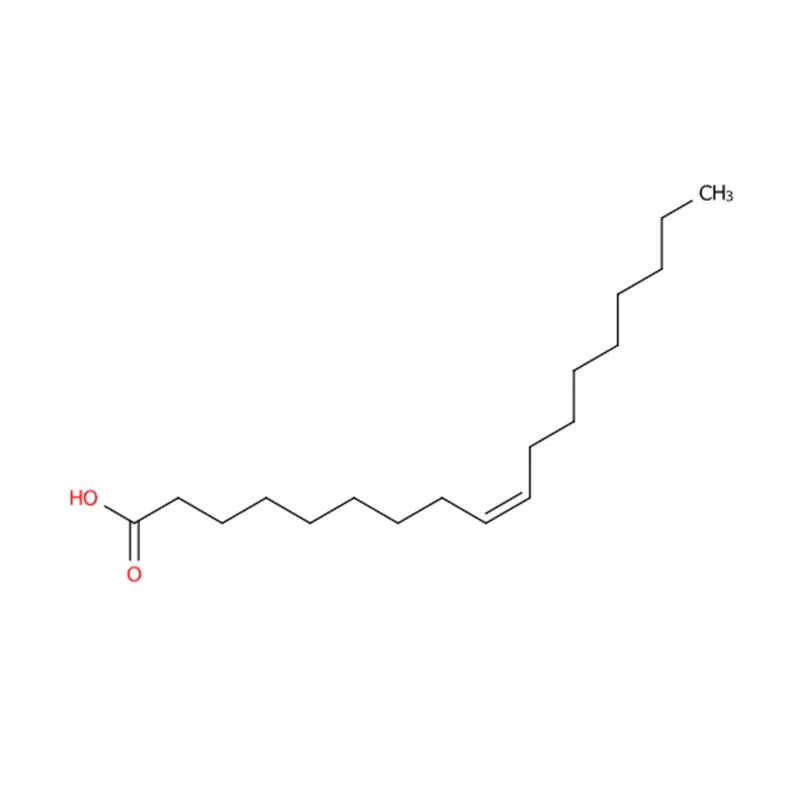
Product Description of Oleic Acid CAS#112-80-1
Oleic acid cannot dissolve in water; nevertheless, it dissolves in benzene and chloroform, and mixes completely with methanol, ethanol, diethyl ether as well as carbon tetrachloride. Owing to its internal double-bond structure, oleic acid is susceptible to oxidation upon exposure to air, which will trigger yellow discoloration and generate off-flavor odors. Under the effect of nitrogen oxides, nitric acid, mercuric nitrate or sulfurous acid, it can undergo corresponding transformation; hydrogenation treatment will convert oleic acid into stearic acid. Furthermore, its double bonds tend to take part in halogen-related chemical reactions to yield halogenated stearic acid.
Oleic acid is generally sourced from olive oil or lard. Manufacturers adopt steam distillation, crystallization or extraction procedures after hydrolysis to obtain this substance. It works as a high-quality solvent for oils, fatty acids and various other oil-soluble compounds. It has extensive deployment in manufacturing soaps, lubricants, mineral flotation reagents, ointment preparations and diverse oleate derivatives.
Oleic acid Chemical Properties
| Melting point | 13-14 °C(lit.) |
| Boiling point | 360 °C |
| density | 0.89 g/mL at 25 °C(lit.) |
| vapor density | 1.03 (vs air) |
| vapor pressure | 52 mm Hg ( 37 °C) |
| refractive index | n20/D 1.377 |
| FEMA | 2815 | OLEIC ACID |
| Fp | 133 °F |
| storage temp. | -20°C |
| solubility | Miscible with ethanol, ether, acetone, chloroform, dimethyl formamide and dimethyl sulfoxide. |
| form | Liquid |
| pka | pKa 5.35(H2O,t =25) (Uncertain) |
| Specific Gravity | 0.892 (20/4℃) |
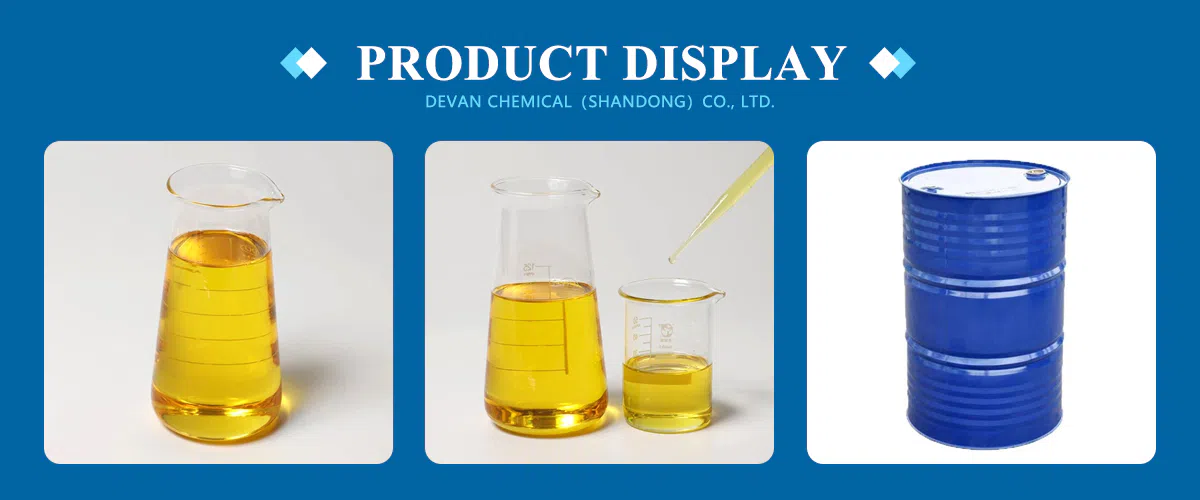
| color | Colorless to pale yellow |
| Odor | Peculiar Lard-Like |
| Odor Type | fatty |
| Water Solubility | negligible |
| Sensitive | Air Sensitive |
| Merck | 146828 |
| JECFA Number | 333 |
| BRN | 1726542 |
| Hydrophilic-Lipophilic Balance (HLB) | 1 |
| Dielectric constant | 2.5(20℃) |
| Stability: | Stable. Combustible. Incompatible with strong oxidizing agents, aluminium. |
| InChIKey | ZQPPMHVWECSIRJ-KTKRTIGZSA-N |
| LogP | 7.698 (est) |
| CAS DataBase Reference | 112-80-1(CAS DataBase Reference) |
| NIST Chemistry Reference | 9-Octadecenoic acid (Z)-(112-80-1) |
| EPA Substance Registry System | Oleic acid (112-80-1) |
Safety Information
| Hazard Codes | T,Xi |
| Risk Statements | 23/24/25-34-40-43-36/37/38-38 |
| Safety Statements | 36/37-37/39-26-36-36/37/39 |
| RIDADR | UN 1198 3/PG 3 |
| WGK Germany | 2 |
| RTECS | LP8925000 |
| F | 10 |
| Autoignition Temperature | 363°C |
| TSCA | Yes |
| HS Code | 29161500 |
| Hazardous Substances Data | 112-80-1(Hazardous Substances Data) |
| Toxicity | LD50 i.v. in mice: 230±18 mg/kg (Or, Wretlind) |

Product Applications of Oleic Acid CAS#112-80-1
Oleic acid is a multi-purpose organic chemical feedstock covering diverse application scenarios.
Chemical Synthesis Raw Materials — It can go through epoxidation reaction to yield epoxy oleate applied as plasticizer. Oxidation treatment enables it to generate azelaic acid, an important substance for polyamide resin manufacturing.
General Industrial & Agricultural Auxiliaries — Oleic acid functions as pesticide emulsifier, printing-dyeing processing aid, industrial solvent, mineral flotation reagent and mold-release agent. Besides, it acts as starting material for carbon paper, ball-pen ink as well as type-writing stencil wax paper.
Oleate Series Derivatives — Multiple oleate derivatives originating from oleic acid enjoy broad-spectrum utilization. When used as chemical reagent, oleic acid is adopted for chromatographic analysis and biochemical studies to test elements including calcium, copper, magnesium and sulfur.
Plastic, Fiber & Textile Industry — It is deployed for producing plasticizers, engineering plastics, synthetic fibers, nylon-8 and nylon-9, softening agents, wood antiseptics, leather processing additives, textile oil additives and fabric finishing agents.
Daily Detergent & Cosmetic Manufacturing — Oleic acid finds its place in synthetic detergents, laundry soaps, emulsifier S-80, alongside multiple cosmetic-grade surfactants and dispersing agents.
Printing Ink, Adhesive & Mineral Processing — It may serve as solvent for printing ink and composite adhesives, and perform as collecting agent or demulsifier within mineral beneficiation workflows.
Lubricant & Metal Working Industry — Oleic acid is incorporated into gear oil, rolling oil, hydraulic fluid and metal-cutting fluid. Its sodium and potassium salts constitute core components of soaps; high-purity sodium oleate delivers outstanding detergency and emulsifying performance.
Functional Metal Oleate Products — Lead, manganese and cobalt oleates work as paint drying agents; copper oleate serves as preservative for fishing nets; aluminum oleate is applied for fabric waterproof treatment and acts as thickener for certain lubricant products. Other oleate metal salts are used in polishing formulations, while barium oleate can be utilized as rodent-killing agent.