Product Description of Ethyl 2-ethylacetoacetate CAS#607-97-6
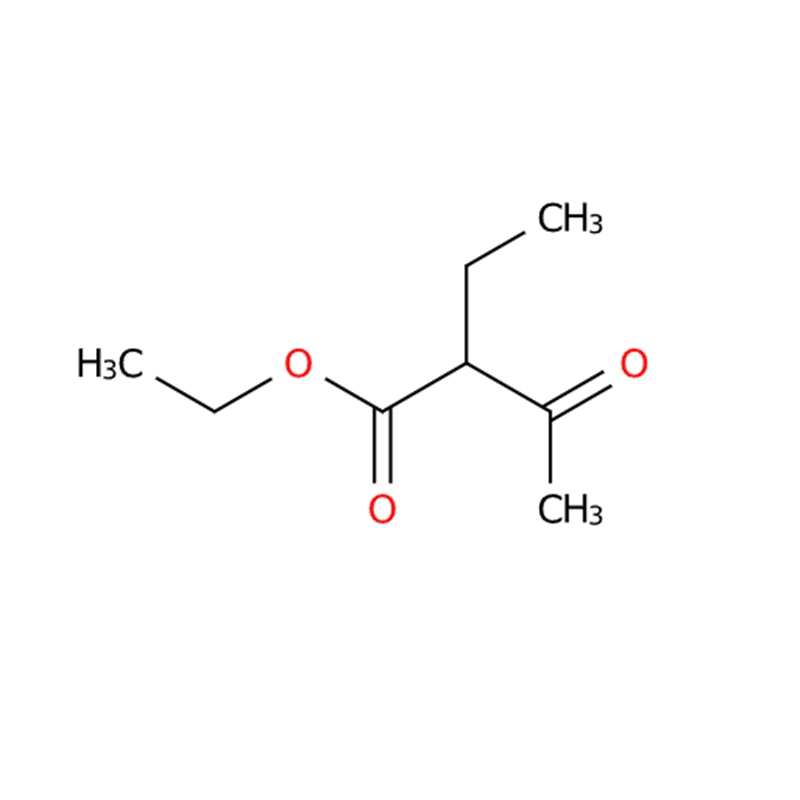
With the molecular formula C8H14O3, ethyl 2-ethyl acetoacetate belongs to the class of organic chemicals. This liquid substance ranges from colourless to light yellow and carries fruity, wine-like and fresh grass-type scent features. Its melting-point for thermal breakdown reaches 170 °C. Under 743 mmHg air pressure, its recorded boiling-point scope falls between 87-189 °C. The substance mainly works as a synthetic intermediate for preparing the medicinal raw material ribavirin.

Ethyl 2-ethylacetoacetate Chemical Properties
| Melting point | 170 °C (decomp) |
| Boiling point | 87-189 °C/743 mmHg (lit.) |
| density | 0.981 g/mL at 25 °C (lit.) |
| refractive index | n20/D 1.421(lit.) |
| Fp | >230 °F |
| storage temp. | Keep in dark place,Sealed in dry,Room Temperature |
| solubility | Chloroform (Slightly), Methanol (Slightly) |
| pka | 12.02±0.46(Predicted) |
| form | Liquid |
| color | Colorless to pale yellow |
| Odor | at 100.00 %. fruity winey green herbal earthy rootbeer ethereal |
| Odor Type | fruity |
| BRN | 636286 |
| LogP | 1.595 (est) |
| CAS DataBase Reference | 607-97-6(CAS DataBase Reference) |
| NIST Chemistry Reference | Butanoic acid, 2-ethyl-3-oxo-, ethyl ester(607-97-6) |
| EPA Substance Registry System | Ethyl 2-ethylacetoacetate (607-97-6) |
| Hazard Codes | Xi |
| Risk Statements | 36/37/38 |
| Safety Statements | 23-24/25-36-26 |
| WGK Germany | 1 |
| TSCA | Yes |
| HazardClass | IRRITANT |
| HS Code | 29183000 |

Product Application of Ethyl 2-ethylacetoacetate CAS#607-97-6
Ethyl 2-ethylacetoacetate is a valuable beta-keto ester intermediate for fine-chemical manufacturing. Its active methylene structure supports multiple condensation and cyclization-type chemical reactions. Its core commercial usage lies in the preparation of ribavirin, a well-known antiviral medicine applied for several viral-related illnesses. Apart from pharmaceutical synthesis, this raw material can also generate agrochemical intermediates for fungicides and plant-growth regulators. It can be adopted to synthesize flavour-and-fragrance components and heterocyclic compounds for laboratory research. Manufacturers need to control reaction temperatures strictly during processing to avoid its thermal decomposition.