Product Description of Methanol CAS#67-56-1
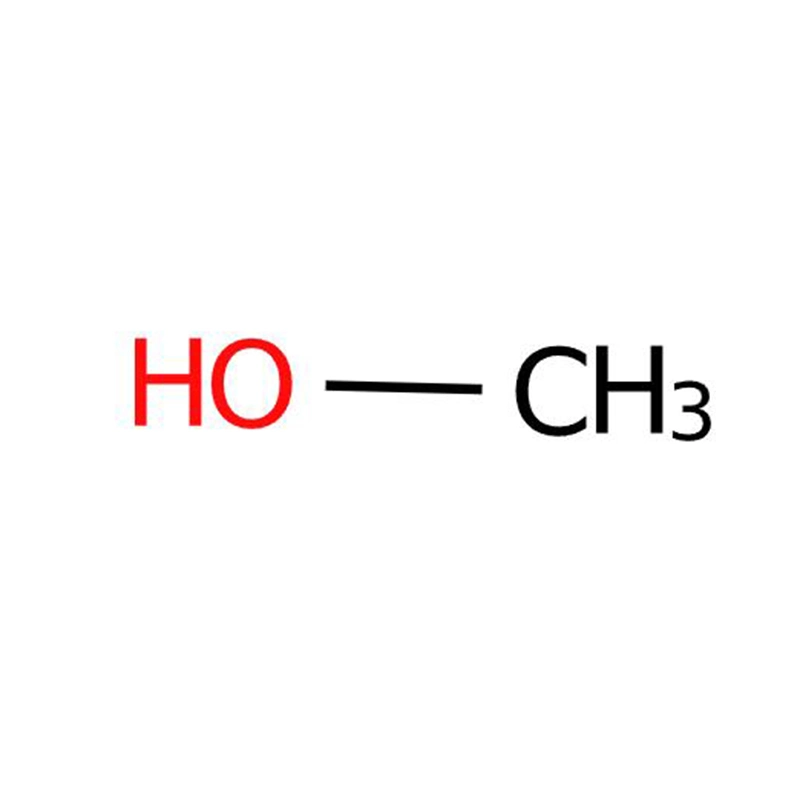
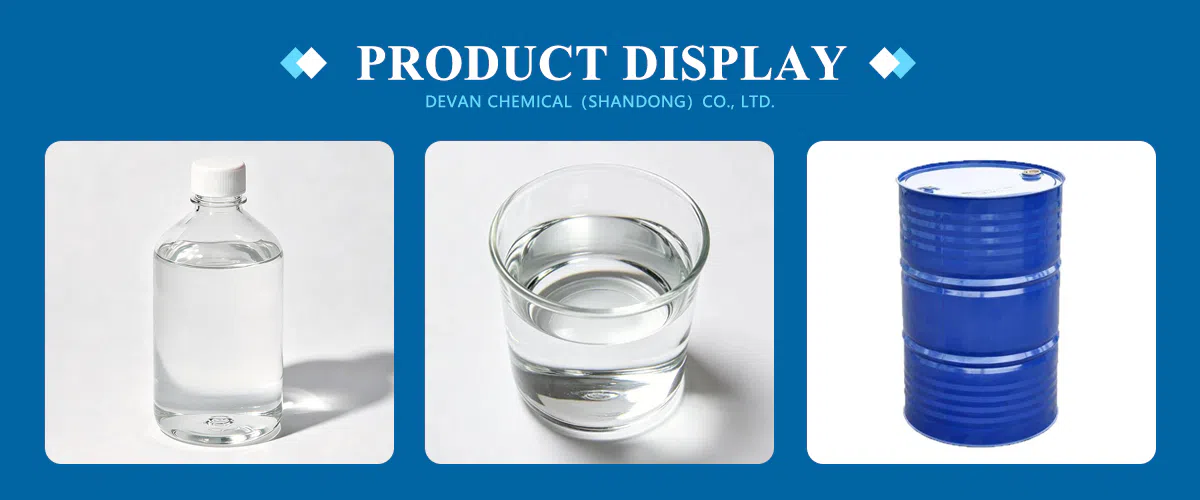
Methanol, alternatively referred to as wood alcohol, is an organic chemical and the simplest saturated monohydric alcohol. It appears as a transparent, colourless fluid characterized by flammability, high volatility, mild alcoholic aroma and acute toxicity.
Under ambient temperature conditions, methanol exhibits negligible corrosivity toward the majority of metallic materials, with lead and aluminium serving as notable exceptions. Its core physical constants are listed as follows: relative density 0.791 g/mL at 25 °C, melting point −98°C, boiling point 64.5°C, flash point 12.22°C and autoignition temperature 463.89°C. Additional parameters cover vapour density of 1.11, vapour pressure of 13.33 kPa (equivalent to 100 mmHg at 21.2°C), and an air explosion range of 6 vol% to 36.5 vol%.
This substance mixes infinitely with water, ethanol, diethyl ether, benzene, ketones, halogenated hydrocarbons and numerous other organic solvents, which endows it with extensive industrial applicability. It is widely deployed as industrial solvent, antifreeze agent, fuel medium and pH neutralizer.
Methanol Chemical Properties
| Melting point | -98 °C(lit.) |
| Boiling point | 65.4 °C(lit.) |
| density | 0.791 g/mL at 25 °C |
| vapor density | 1.11 (vs air) |
| vapor pressure | 410 mm Hg ( 50 °C) |
| refractive index | n20/D 1.329(lit.) |
| Fp | 52 °F |
| storage temp. | 2-8°C |
| solubility | benzene: miscible(lit.) |
| pka | 15.2(at 25℃) |
| form | Liquid Free From Particulates |
| color | <10(APHA) |
| Specific Gravity | 0.793 (20/20℃) |
| Relative polarity | 0.762 |
| Odor | Faint alcohol odor detectable at 4 to 6000 ppm (mean = 160 ppm) |
| explosive limit | 5.5-44%(V) |
| Odor Threshold | 33ppm |
| Water Solubility | miscible |
| λmax | λ: 210 nm Amax: 0.50 |
| λ: 220 nm Amax: 0.30 | |
| λ: 230 nm Amax: 0.15 | |
| λ: 235 nm Amax: 0.10 | |
| λ: 240 nm Amax: 0.05 | |
| λ: 260 nm Amax: 0.01 | |
| λ: 400 nm Amax: 0.01 | |
| Merck | 145957 |
| BRN | 1098229 |
| Henry's Law Constant | 4.99 at 25 °C (headspace-GC, Gupta et al., 2000) |
| Exposure limits | TLV-TWA (200 ppm) (ACGIH), 260mg/m3, 1040mg/m3 (800 ppm) 15minutes (NIOSH); STEL 310mg/m3 (250 ppm); IDLH 25,000 ppm (NIOSH). |
| Dielectric constant | 33.6(20℃) |
| LogP | -0.77 |
| CAS DataBase Reference | 67-56-1(CAS DataBase Reference) |
| NIST Chemistry Reference | Methyl alcohol(67-56-1) |
| EPA Substance Registry System | Methanol (67-56-1) |
Safety Information
| Hazard Codes | Xn,T,F |
| Risk Statements | 10-20/21/22-68/20/21/22-39/23/24/25-23/24/25-11-40-36-36/38-23/25 |
| Safety Statements | 36/37-7-45-16-24/25-23-24-26 |
| RIDADR | UN 1170 3/PG 2 |
| WGK Germany | 1 |
| RTECS | PC1400000 |
| F | 46091 |
| Autoignition Temperature | 385 °C |
| TSCA | Yes |
| HS Code | 2905 11 00 |
| HazardClass | 3 |
| PackingGroup | II |
| Hazardous Substances Data | 67-56-1(Hazardous Substances Data) |
| Toxicity | LD50 oral (rat) |
| 5628 mg/kg | |
| LD50 skin (rabbit) | |
| 15,840 mg/kg | |
| LC50 inhal (rat) | |
| >145,000 ppm (1 h) | |
| PEL (OSHA) | |
| 200 ppm (260 mg/m3) | |
| TLV-TWA (ACGIH) | |
| 200 ppm (260 mg/m3)—skin | |
| STEL (ACGIH) | |
| 250 ppm (328 mg/m3) | |
| IDLA | 6,000 ppm |
Product Applications of Methanol CAS#67-56-1
Methanol boasts comprehensive application prospects, acting as both a fundamental organic feedstock and premium clean fuel. Within fine chemical and plastic manufacturing sectors, it is the core precursor for synthesizing vital organics including formaldehyde, acetic acid, methyl chloride, methylamine and dimethyl sulfate. It also constitutes an indispensable raw material for pesticide and pharmaceutical manufacturing chains.
Through deep conversion processes, methanol can be formulated into eco-friendly new clean fuel or mixed with gasoline for combustion purposes. Its largest consumption route lies in catalytic oxidation into formaldehyde: the reaction proceeds at high temperatures with pumice silver or alternative solid catalysts. Globally, over 40% of methanol output is consumed for formaldehyde synthesis. The resulting formaldehyde is further processed to manufacture resins, plastics and a full spectrum of chemical intermediates, and supports the production of roughly one hundred downstream derivatives such as 1,4-butanediol and hexamethylenetetramine. Moreover, high-performance engineering plastic polyoxymethylene is synthesized from methanol-based intermediates and enjoys broad industrial adoption.
When reacted with ammonia at 370–420 °C under pressure ranging from 5.0 MPa to 20.0 MPa with activated alumina as catalyst, methanol yields a mixed stream of monomethylamine, dimethylamine and trimethylamine, which are isolated via distillation. Such methylamine products serve universal roles in agrochemicals, pharmaceuticals, dyestuffs and organic synthetic workflows.
Dehydration of methanol into dimethyl ether is achievable over metal silicon-aluminum catalysts or ZSM-5 molecular sieve catalysts. Additionally, dehydrogenation of methanol generates methyl formate, a critical synthetic intermediate for producing formamide and dimethylformamide. Formamide finds wide deployment in drug manufacturing, aroma chemical synthesis, colorants, paper finishing, fiber softening and polar reaction solvents for organic chemistry. Dimethylformamide, a high-value organic raw material and superior solvent, is applied as gas absorbent, pesticide carrier, processing agent for PVC artificial leather, spinning solvent for polyacrylonitrile fiber and extractant for butadiene separation